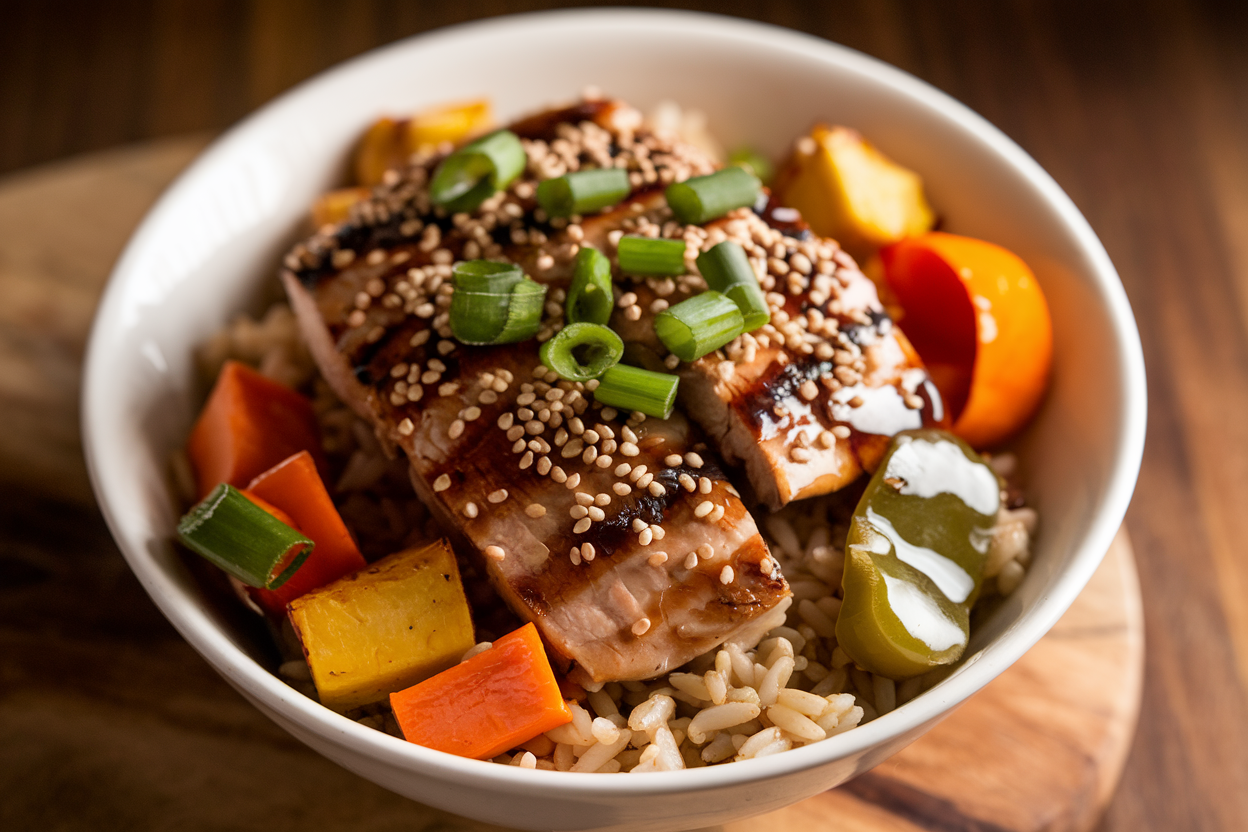
Teriyaki Chicken Buddha Bowl That Melts in Your Mouth: Sticky-Sweet, Crunchy, and Meal-Prep Gold
You want dinner that feels like takeout but performs like a protein-packed athlete? This Teriyaki Chicken Buddha Bowl delivers big flavor with zero drama. Juicy chicken, glossy sauce, crisp veggies, and fluffy rice—all in one photogenic bowl that actually fills you up.
It’s fast, it’s balanced, and it’s the kind of meal you’ll crave again tomorrow. If you’re bored of beige food and sad salads, this is the glow-up your weeknight routine needs.
What Makes This Recipe So Good
- Flavor power: Homemade teriyaki means real ginger, real garlic, and just enough sweetness to make you want seconds—without the cloying syrup vibe.
- Texture play: Tender chicken, crunchy carrots, creamy avocado, snappy edamame, and fluffy rice. Contrast = satisfaction.
- Meal-prep friendly: Cook once, assemble all week.
The sauce keeps beautifully and everything reheats like a champ.
- Customizable: Swap rice for quinoa, chicken for tofu, or toss in whatever veggies are loitering in your crisper. It’s a blueprint, not a cage.
- Macro-balanced: Protein, fiber, healthy fats, and complex carbs. Your body (and your energy levels) will notice.
Ingredients Breakdown
- Chicken: 1.5 pounds boneless skinless chicken thighs (juicy and forgiving) or breasts (leaner, still great).
- Rice base: 3 cups cooked jasmine or brown rice.
Cauliflower rice works if you’re keeping carbs lower.
- Veggies: 1 cup shelled edamame, 1 cup shredded carrots, 1 cup thinly sliced cucumber, 1 red bell pepper (sliced), 1 avocado (sliced), 2 cups steamed broccoli florets.
- Aromatics: 3 cloves garlic (minced), 1 tablespoon fresh ginger (grated).
- Teriyaki sauce: 1/3 cup low-sodium soy sauce or tamari, 3 tablespoons honey or maple syrup, 2 tablespoons rice vinegar, 1 tablespoon toasted sesame oil, 1/2 cup water, 1 tablespoon cornstarch (mixed with 1 tablespoon water), optional 1–2 teaspoons sriracha for heat.
- Garnishes: 2 green onions (sliced), 1 tablespoon sesame seeds, lime wedges, optional nori strips.
- Cooking oil: 1–2 tablespoons neutral oil (avocado or canola) for searing.
- Salt & pepper: To season the chicken lightly before cooking.
Instructions
- Cook your base: Make rice according to package directions. Fluff and keep warm. If using cauliflower rice, sauté in a little oil with salt for 3–4 minutes.
- Prep the veggies: Slice the cucumbers and bell pepper, shred carrots, steam broccoli until crisp-tender, and shell the edamame if needed.
Slice avocado last to prevent browning.
- Mix the teriyaki: In a bowl, whisk soy sauce, honey, rice vinegar, sesame oil, water, garlic, ginger, and sriracha if using. In a separate small cup, stir cornstarch with water to make a slurry.
- Season the chicken: Pat chicken dry. Sprinkle with salt and pepper.
Cut into bite-size pieces for faster cooking (or leave whole if you prefer slicing after).
- Sear the chicken: Heat oil in a large skillet over medium-high. Add chicken in a single layer and cook 4–6 minutes per side (less if cubed) until browned and cooked through. Remove excess moisture as needed to get that good sear.
- Sauce it up: Lower heat to medium.
Pour in the teriyaki mixture (without the slurry). Simmer 1–2 minutes, then stir in the slurry. Cook, stirring, until the sauce turns glossy and clings to the chicken, about 2–3 minutes.
- Assemble bowls: Add a scoop of rice, top with teriyaki chicken, and arrange veggies around it.
Finish with green onions, sesame seeds, and a squeeze of lime. Add extra sauce if you like things saucy—no judgment.
- Serve: Eat immediately while warm, with chopsticks if you’re feeling fancy and a fork if you’re honest.
Storage Instructions
- Fridge: Store rice, chicken, and veggies separately in airtight containers for up to 4 days. Keep avocado and cucumber fresh by slicing day-of.
- Freezer: Freeze chicken and rice (sauce included) for up to 2 months.
Thaw overnight in the fridge; reheat gently and add fresh veggies when serving.
- Reheating: Microwave chicken and rice with a splash of water, covered, 60–90 seconds. Add cold crisp veggies after to keep the crunch.
- Sauce saver: If you love extra sauce, make a double batch and refrigerate for up to 1 week. Whisk briefly before using.
Why This is Good for You
- Protein punch: Chicken and edamame deliver high-quality protein to support muscle recovery and satiety.
Your afternoon snack attacks? Fewer.
- Fiber flex: Brown rice, veggies, and avocado boost fiber for steady energy and happy digestion.
- Healthy fats: Avocado and sesame oil bring monounsaturated fats that support heart health and keep flavors luxurious.
- Micronutrient mix: Broccoli, peppers, and carrots bring vitamins A, C, K, plus antioxidants your body will gladly cash in.
- Smarter sweetness: A touch of honey balances the sauce so you get the takeout vibe without the sugar bomb. IMO, it’s the best of both worlds.
What Not to Do
- Don’t crowd the pan: Overpacked chicken steams and turns pale and sad.
Work in batches for real browning.
- Don’t skip the slurry: Cornstarch makes the sauce cling. Without it, you’ll get a watery puddle. Hard pass.
- Don’t overcook the veggies: Keep them crisp-tender.
Mushy broccoli is a morale killer.
- Don’t salt blindly: Soy sauce is salty. Taste before adding extra or you’ll overshoot and need a gallon of water afterward.
- Don’t sauce too early: Sear first, then sauce. That’s how you lock in flavor and texture.
Alternatives
- Protein swaps: Firm tofu (pressed and pan-seared), shrimp (quick cook), or salmon (sear skin-on then glaze).
For tofu, toss in cornstarch pre-sear for crisp edges.
- Grain swaps: Quinoa, farro, or mixed greens for a lighter bowl. Cauliflower rice for low-carb without sacrificing volume.
- Sauce tweaks: Use coconut aminos for a soy-free, slightly sweeter profile; reduce the honey by 1 tablespoon to balance.
- Veggie freestyle: Snap peas, radishes, purple cabbage, roasted sweet potato, or pickled onions. Color = nutrients and yes, bragging rights.
- Gluten-free: Use tamari or certified gluten-free soy sauce and check labels on vinegar and sriracha.
FAQ
Can I make the sauce ahead of time?
Yes.
Mix and refrigerate up to a week. Thicken with the cornstarch slurry when heating so it stays glossy and smooth.
Breasts or thighs—which is better?
Thighs are juicier and more forgiving, but breasts work great if you don’t overcook them. If using breasts, slice into cutlets or cubes for quicker, even cooking.
How do I keep avocado from browning?
Slice right before serving and hit it with lime.
For meal prep, store slices tightly wrapped with a bit of lime juice in an airtight container.
Is this good cold?
Absolutely. It eats like a killer lunch bowl straight from the fridge. Keep the rice and chicken separate if you want to reheat only those parts later.
What if I don’t have cornstarch?
Use arrowroot powder in the same ratio.
Add it to the sauce over low heat and avoid boiling hard to keep it from turning gummy.
How can I make it spicier without wrecking the balance?
Add sriracha to the sauce or top with chili crisp. Keep sweetness the same so the heat has a counterpoint—your taste buds love contrast.
Can I air-fry the chicken?
Yes. Toss seasoned chicken with a little oil and air-fry at 400°F (205°C) for 10–14 minutes, shaking halfway.
Warm the sauce separately, then toss to coat.
What’s the best rice for texture?
Jasmine for fluffy and fragrant, brown rice for chew and fiber. If you want max sauce absorption, short-grain white rice is low-key elite.
In Conclusion
This Teriyaki Chicken Buddha Bowl is what happens when weeknight convenience meets takeout-level satisfaction. You get seared, glossy chicken; crisp, colorful veggies; and a base that actually keeps you full.
It’s flexible, meal-prep friendly, and dangerously repeatable. Make it once and watch it become your new “I’ve got this” dinner move—because tasty and healthy don’t have to argue.
Printable Recipe Card
Want just the essential recipe details without scrolling through the article? Get our printable recipe card with just the ingredients and instructions.