Seared Ahi Tuna Steaks That Look Fancy, Cook Fast, and Taste Like a $40 Entrée
You want restaurant-level food without the price, the wait, or the mystery sauce. Enter Seared Ahi Tuna Steaks—juicy in the middle, crispy on the edges, and ready in 10 minutes flat. This is the kind of dish that makes people think you secretly trained in Tokyo.
The truth? It’s absurdly simple. Buy good fish, don’t overcook it, and let heat do the flexing.
Why This Recipe Works
Seared ahi tuna (also called yellowfin) is lean and meaty, so it loves high heat and short cook times.
A hard sear creates a caramelized crust while keeping the center rare to medium-rare, which protects its buttery texture and ocean-clean flavor. A simple marinade doesn’t overpower the fish; it just boosts umami and adds a glossy finish.
We season aggressively on the outside because that’s where the action is. Think salty, toasty sesame, and peppery bite that snaps under your teeth.
The result? A steak that eats like a surf-and-turf hybrid—with none of the fuss.
What Goes Into This Recipe – Ingredients
- 2 ahi tuna steaks (6–8 oz each, 1 to 1.5 inches thick), sushi-grade if you plan to keep it rare
- 2 tablespoons soy sauce (or tamari for gluten-free)
- 1 tablespoon sesame oil
- 1 tablespoon neutral oil (avocado, canola, or grapeseed) for searing
- 1 tablespoon rice vinegar
- 1 teaspoon honey or maple syrup
- 1 teaspoon fresh grated ginger
- 1 clove garlic, finely minced
- 1 tablespoon sesame seeds (white, black, or mixed)
- 1/2 teaspoon coarse black pepper
- Flaky sea salt, to finish
- Optional garnish: sliced scallions, lime wedges, wasabi, pickled ginger
Step-by-Step Instructions
- Pat the tuna dry. Moisture is the enemy of sear. Use paper towels and get them really dry.
Season both sides lightly with black pepper.
- Mix the quick marinade. In a bowl, whisk soy sauce, sesame oil, rice vinegar, honey, ginger, and garlic. You’re building a glossy, savory cloak—nothing too heavy.
- Marinate briefly. Add the tuna and coat. Let it sit for 5–10 minutes max.
Longer and the acids start changing the texture, which we don’t want.
- Preheat your pan like you mean it. Use a heavy skillet (cast iron or stainless) over medium-high to high heat. Add neutral oil and let it shimmer. If it’s not hot enough, you’ll steam the fish.
Hard no.
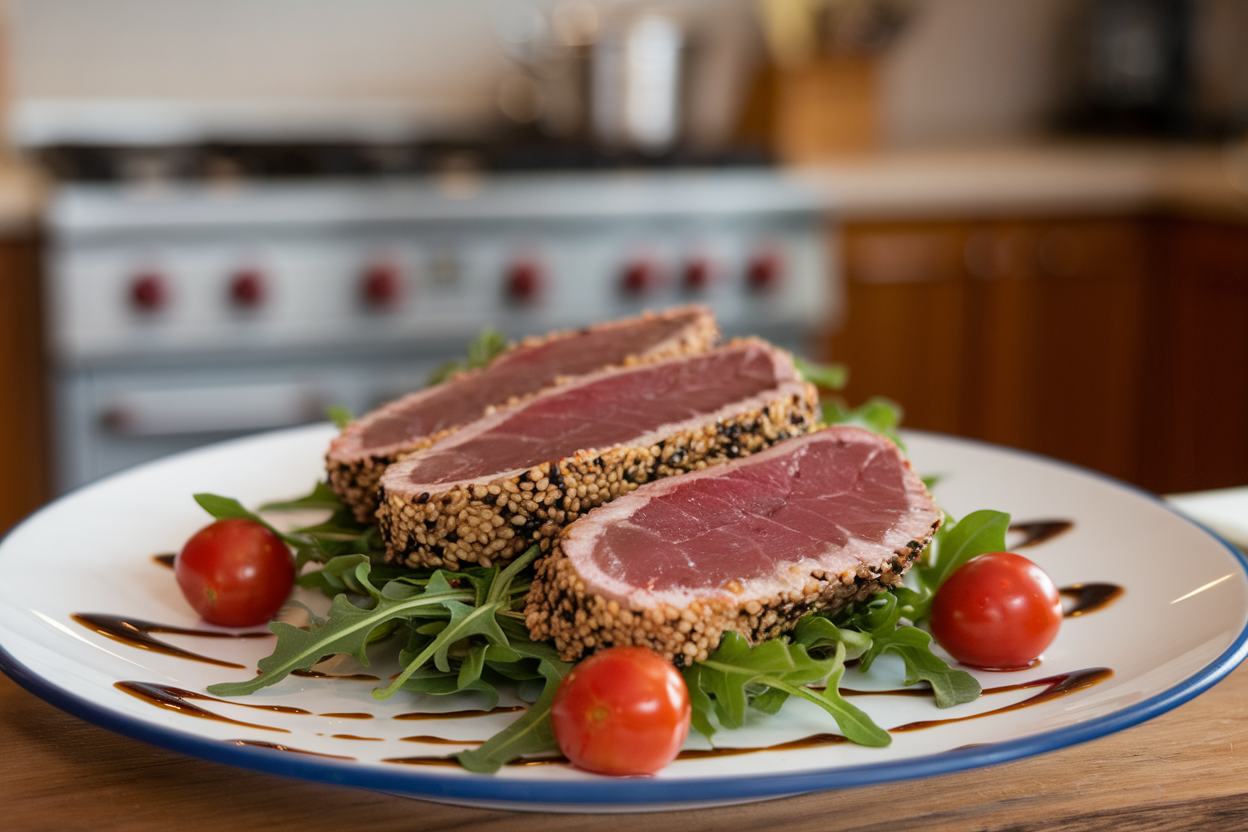
- Sesame seed crust. Press sesame seeds onto both sides of the tuna right before searing. They toast in the pan and add crunch.
- Sear fast. Place steaks in the pan. Don’t move them for 45–60 seconds per side for rare, 75–90 seconds per side for medium-rare.
You’re looking for a golden edge and ruby center.
- Baste, optional but baller. In the last 15 seconds, spoon a little leftover marinade around the fish to bubble and lacquer the edges. Not mandatory, very delicious.
- Rest briefly. Transfer to a cutting board and let sit for 2 minutes. This lets juices settle so the slices look clean, not tragic.
- Slice and finish. Slice against the grain into 1/4–1/2 inch pieces.
Sprinkle flaky salt. Add scallions and a squeeze of lime if you’re into happiness.
Keeping It Fresh
Start with fresh, high-quality tuna—firm, glossy, and clean-smelling. If you’re serving it rare, choose sushi-grade from a trusted fishmonger.
Keep it cold right up until it hits the pan; chilled fish sears better and stays tender inside.
Leftovers? Store sliced tuna in an airtight container for up to 24 hours. Serve chilled over salad or rice bowls rather than reheating, which can turn it chalky.
If you must reheat, do a lightning-quick warm in a hot pan—10–15 seconds per side. FYI: it’s better cold.
Benefits of This Recipe
- Lightning fast. From fridge to table in under 15 minutes. That’s faster than scrolling the delivery app.
- High protein, low fuss. Lean fish with big-time omega-3s and minimal prep.
- Restaurant vibes at home. Crispy crust, tender center, wow factor.
Plates will be cleared in silence.
- Flexible flavor. Works with Asian, Mediterranean, or spicy profiles without breaking the core method.
- Minimal equipment. One pan. One bowl. Zero drama.
What Not to Do
- Don’t overmarinate. Acid = texture changes.
Ten minutes is the cap.
- Don’t start with a cold pan. You’ll get gray tuna and sadness. Preheat until the oil shimmers.
- Don’t overcook. Ahi goes from silky to sawdust fast. Pull it early; it keeps cooking off heat.
- Don’t skip drying the fish. Wet surface equals weak sear.
Paper towels are your friend.
- Don’t use olive oil for searing. It smokes too low. Use high-heat oil and finish with olive oil if you want flavor.
Different Ways to Make This
- Spicy Gochujang. Whisk gochujang, soy, rice vinegar, and a touch of honey. Finish with toasted sesame and scallions.
- Citrus Ponzu. Swap soy for ponzu and finish with yuzu or lime zest.
Clean, bright, very sushi bar.
- Black Pepper + Lemon. Cracked pepper crust, quick sear, and lemon-caper drizzle. Mediterranean meets steakhouse.
- Everything Bagel Crust. Coat in everything seasoning; serve with a wasabi-lime yogurt sauce. Yes, it slaps.
- Togarashi Rub. Dust with shichimi togarashi for heat and citrus.
Serve with steamed rice and cucumber salad.
FAQ
How done should ahi tuna be?
Best practice is rare to medium-rare with a deep pink center. Ahi is lean and gets dry when fully cooked. If you prefer more doneness, sear a bit longer but expect a firmer, less buttery texture.
Do I need sushi-grade tuna?
If you’re serving it rare, yes—go for sushi-grade from a reputable fishmonger.
It’s handled and stored with raw consumption in mind. For medium to medium-well, standard high-quality tuna steaks are fine, but fresher is always better.
Can I make this without a cast-iron skillet?
Absolutely. Use any heavy stainless-steel pan.
The key is high heat and dry fish. Avoid nonstick at super-high temps unless it’s rated for it; some coatings don’t love that heat.
What should I serve with seared ahi tuna?
Top picks: sesame cucumbers, sticky rice, mango slaw, seaweed salad, or garlicky sautéed greens. A quick wasabi mayo or citrus ponzu on the side makes it feel plated-by-a-pro.
How do I know when to flip?
Watch the edges—when the bottom 1/8 to 1/4 inch turns opaque and you see a browned crust, flip confidently.
Usually around 45–60 seconds on a ripping-hot pan.
Can I grill it instead?
Yes, and it’s awesome. Oil the fish, preheat the grill to high, and sear 45–60 seconds per side. Use a clean, hot grate to prevent sticking.
Same rare center rules apply.
Is this freezer-friendly?
You can freeze raw tuna steaks tightly wrapped for up to 2–3 months. Thaw overnight in the fridge and pat dry before searing. Cooked tuna is not great after freezing—texture goes meh.
What oil is best for searing?
Use high smoke point oils like avocado, canola, or grapeseed.
Save extra-virgin olive oil for drizzling at the end if you want that flavor.
Final Thoughts
Seared Ahi Tuna Steaks are proof that “fast” and “fancy” can be the same thing. With a screaming-hot pan and a short, punchy marinade, you’ll get a crispy-edge, melt-in-the-middle showpiece in minutes. It’s weeknight-easy, date-night-impressive, and meal-prep-friendly—IMO, the trifecta.
Now go make the kind of dinner that shuts the table up for a good 30 seconds.
Printable Recipe Card
Want just the essential recipe details without scrolling through the article? Get our printable recipe card with just the ingredients and instructions.