Pan-Roasted Chicken Breasts That Taste Like a $30 Entrée (Cooked in 20 Minutes)
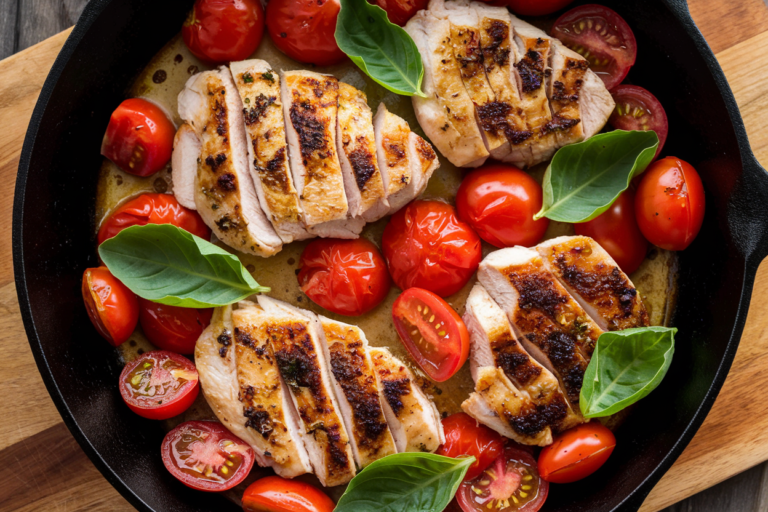
You want a dinner that hits like a restaurant dish without the price tag or the pretentious plating. This is it. Pan-Roasted Chicken Breasts deliver crispy skin, juicy meat, and a glossy pan sauce that makes people think you trained in Lyon.
You’ll go from cold pan to “holy wow” in under half an hour, with ingredients you probably already have. If you can heat a skillet and not panic at a sizzle, you can absolutely nail this.
Why You’ll Love This Recipe
- Crispy skin, juicy inside: The stovetop-to-oven method gives you shatter-crisp skin and tender, flavorful meat.
- Weeknight fast: About 20–25 minutes, start to finish, including the sauce. Yes, really.
- Restaurant-level sauce: A quick pan reduction turns everyday chicken into “who made this?” energy.
- Flexible flavors: Swap herbs, add spices, or change the acid—it all works.
- Zero fuss, big payoff: This is technique-forward, not ingredient-dependent, which IMO is the best kind of cooking.
Shopping List – Ingredients
- 2 bone-in, skin-on chicken breasts (about 10–12 oz each; boneless works but adjust time)
- Kosher salt and freshly ground black pepper
- 1–2 tablespoons neutral oil (grapeseed, canola, or avocado)
- 1 tablespoon unsalted butter
- 2 cloves garlic, lightly crushed
- Fresh herbs (a few sprigs of thyme or rosemary)
- 1/3 cup chicken stock (low-sodium)
- 1–2 tablespoons dry white wine or lemon juice
- 1 teaspoon Dijon mustard (optional, but wildly good)
- 1 teaspoon capers (optional for a briny pop)
Let’s Get Cooking – Instructions
- Prep the chicken: Pat the chicken breasts very dry with paper towels.
Season generously on both sides with salt and pepper. Leave at room temp for 15 minutes to take the chill off.
- Heat the pan: Set a heavy oven-safe skillet (cast iron or stainless) over medium-high heat. Add the oil and heat until it shimmers.
Preheat your oven to 400°F (205°C).
- Skin-side down first: Place chicken in the pan skin-side down. It should sizzle enthusiastically. Reduce heat slightly to medium so the skin browns without burning.
- Render and crisp: Cook undisturbed for 6–8 minutes until the skin is deep golden and releases easily.
If it sticks, it’s not ready—give it another minute.
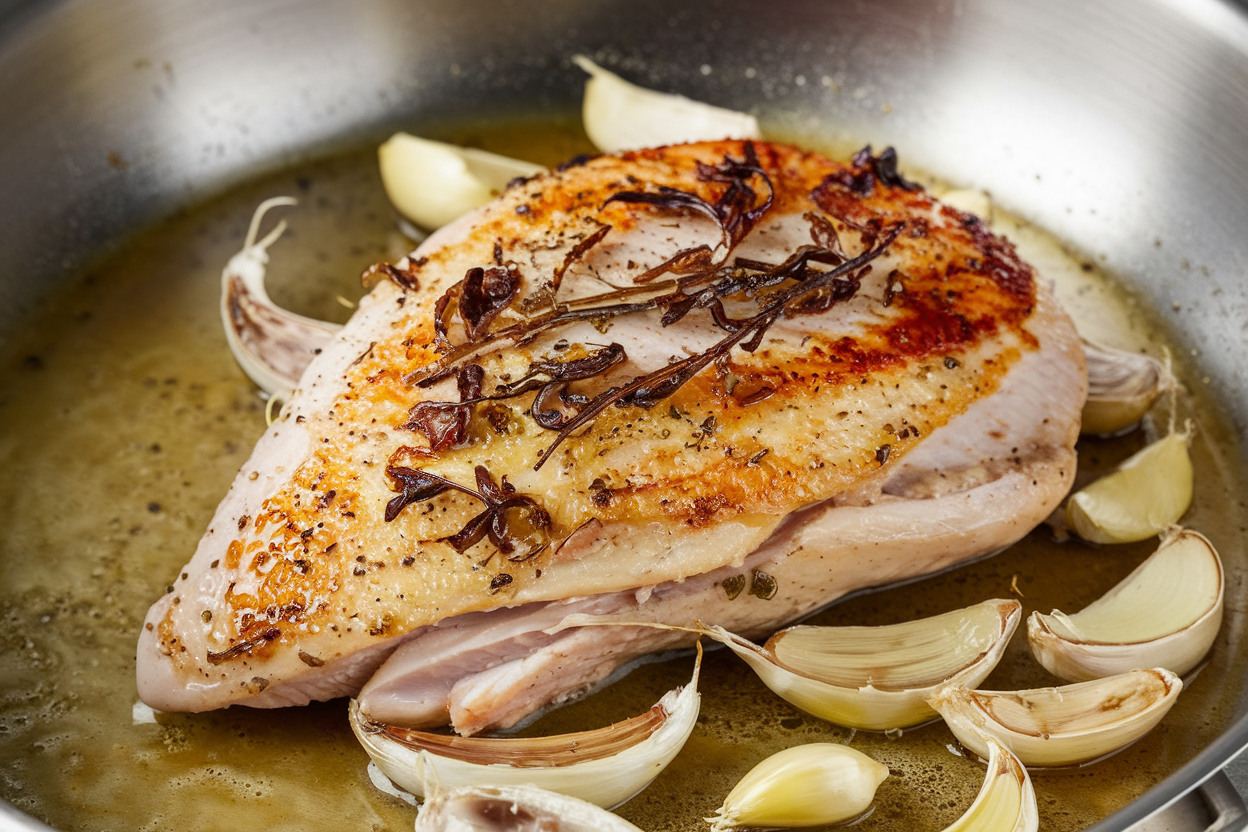
- Flip and flavor: Flip the breasts skin-side up. Add the butter, smashed garlic, and herbs to the pan. Tilt and baste the chicken with the foaming butter for 30–45 seconds.
- Roast to finish: Transfer the skillet to the oven.
Roast 8–12 minutes until the thickest part hits 155–160°F. Carryover will finish it to 165°F while resting.
- Rest, don’t rush: Move chicken to a plate and tent loosely with foil. Rest 5–8 minutes so the juices settle.
- Make the pan sauce: Pour off excess fat, leaving about 1 tablespoon plus the browned bits.
Set pan over medium heat. Add wine or lemon juice and scrape up the fond. Reduce by half, then add stock and simmer until it lightly coats a spoon.
- Finish the sauce: Whisk in Dijon and capers if using.
Cut the heat and swirl in any resting juices from the chicken. Taste and adjust salt/pepper. For extra gloss, whisk in a small knob of cold butter.
- Serve: Slice chicken across the grain or serve whole.
Spoon sauce over the top. Queue applause.
Keeping It Fresh
- Storage: Refrigerate leftovers in an airtight container for up to 3 days. Keep the sauce separate if possible to preserve skin texture.
- Reheating: Re-crisp in a 375°F oven for 8–10 minutes, covered loosely with foil for the first half.
Warm sauce in a small pan; don’t boil it to death.
- Freezing: Slice the chicken, freeze flat with a bit of sauce in a freezer bag for up to 2 months. Thaw overnight and refresh with a splash of stock.
- Meal prep tip: Cook skin-on for flavor, then slice and use in salads, bowls, or sandwiches. Sauce becomes instant dressing with a spoon of olive oil.
FYI, that’s a power move.
What’s Great About This
- Technique over recipe: Once you learn the sear-roast method, you can apply it to almost any protein.
- Balanced flavors: Rich chicken, bright acid, savory stock, and a little butter = harmony.
- Minimal dishes: One pan for the chicken and the sauce. Your sink says thanks.
- Scales beautifully: Cook two breasts or six—just don’t crowd the pan.
- Kid-and-guest friendly: Familiar enough to comfort, impressive enough to flex.
Common Mistakes to Avoid
- Starting with wet chicken: Moisture blocks browning. Dry thoroughly for crisp skin.
- Too hot, too fast: A scorched exterior and raw interior is not a vibe.
Moderate the heat.
- Skipping the thermometer: Guessing equals dry meat. Aim for 155–160°F before resting.
- Crowding the pan: Overcrowding steams the chicken. Work in batches or use two pans.
- Neglecting rest time: Cutting immediately spills the juices.
Give it a few minutes to relax—like us after emails.
- Over-reducing the sauce: If it gets syrupy and salty, rescue it with a splash of stock and whisk.
Variations You Can Try
- Garlic-Lemon Piccata: Add extra capers, 2 tablespoons lemon juice, and finish with parsley. Tangy and bold.
- Smoky Paprika + Honey: Season chicken with smoked paprika and a pinch of cumin. Finish sauce with 1 teaspoon honey and a squeeze of lemon.
- Creamy Dijon: Stir in 2 tablespoons heavy cream with the Dijon for a velvety finish.
Pepper it up.
- Herb Bomb: Chop dill, tarragon, and chives; stir into the sauce off heat. Bright, springy, crushable.
- Mushroom Marsala-ish: Sauté sliced creminis after searing, deglaze with Marsala, then stock. Reduce and finish with butter.
- Boneless Quickie: Use boneless, skinless breasts; pound to even thickness, sear 3–4 minutes per side, then oven 5–7 minutes.
Sauce stays the same.
FAQ
Can I use boneless, skinless chicken breasts?
Yes. Pound to even thickness for even cooking. Sear in oil 3–4 minutes per side, then finish in the oven 5–7 minutes.
They’ll cook faster and won’t get that crispy skin, but the sauce still makes them sing.
What if I don’t have an oven-safe skillet?
Sear in a regular skillet, then transfer the chicken to a preheated sheet pan to finish in the oven. Bring the original skillet back to the stove to build your sauce with the drippings.
How do I keep the skin from sticking?
Start with a hot, lightly oiled pan and super-dry chicken. Once the skin browns properly, it releases naturally.
If it’s glued to the pan, it’s not ready—give it another minute or two.
Can I make this dairy-free?
Absolutely. Skip the butter and baste with oil. For the sauce, finish with a splash of olive oil for body or a knob of dairy-free butter.
Still delicious.
Is white wine necessary?
Nope. Lemon juice, a splash of apple cider vinegar, or even a bit of dry vermouth works. The goal is bright acidity to balance the richness.
What sides go best with pan-roasted chicken breasts?
Roasted potatoes, garlicky green beans, simple arugula salad, or creamy polenta.
If you want applause, spoon extra sauce over mashed potatoes. You’re welcome.
How do I know when it’s done without a thermometer?
Not ideal, but look for clear juices and firm (not hard) flesh. Pierce the thickest part; if juices run clear and the meat isn’t pink, you’re close.
That said, a $10 thermometer prevents heartbreak. FYI.
My Take
This recipe is proof that technique beats trends. Browning, basting, and reducing are small moves that give big, repeatable wins.
It’s the kind of weeknight staple that teaches you how heat behaves, how flavor stacks, and how a simple sauce can flip “okay chicken” into “make this again.” Keep the method, riff the flavors, and claim your 20-minute culinary flex.
Printable Recipe Card
Want just the essential recipe details without scrolling through the article? Get our printable recipe card with just the ingredients and instructions.