Easy Sheet Pan Fish and Chips: A No-Fuss Weeknight Dinner
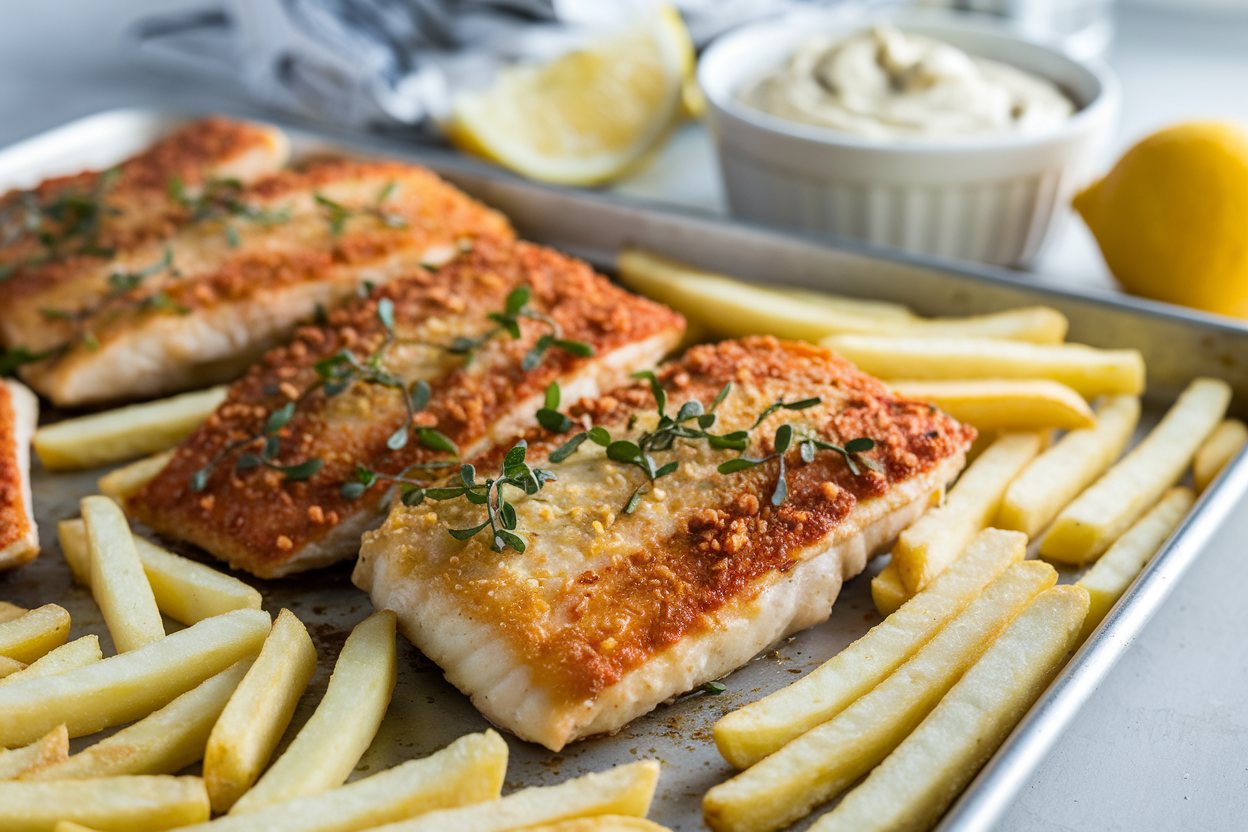
Forget double frying or oil-stained kitchens—this Sheet Pan Fish & Chips recipe rewires the way you think about this classic. Imagine crispy, golden fish with crunchy chips, all cooked in one pan, no fancy gadgets, and zero stress. It’s that easy life upgrade where dinner practically solves itself but still impresses like you spent hours slaving away.
If you’re ready to breeze through your next meal with maximum flavor and minimum drama, keep reading. This isn’t your grandma’s fish and chips—it’s faster, cleaner, and yes, just as addictive.
Why This Recipe Works
This recipe works because it leverages the magic of the sheet pan to cook everything evenly without the mess of deep frying. The single-pan method means fewer dishes and less time standing over the stove watching awkward oil splatter.
Plus, the oven’s dry heat crisps the fish batter and potatoes beautifully, giving you that irresistible crunch while keeping the fish tender and flaky inside. Another secret weapon here is spacing: spreading everything out on the pan allows hot air to circulate for the crispiest texture. Plus, the potatoes soak up just enough seasoning without becoming soggy.
You get classic fish and chips textures and flavors without the greasy guilt or kitchen chaos. Also, swapping deep frying for baking boosts nutrition and keeps prep simple—older recipes wish they were this clever.
Ingredients
- White fish fillets: cod, haddock, or pollock (about 4 pieces, 4-6 oz each)
- Russet potatoes: 4 large, peeled and cut into classic chips
- All-purpose flour: 1 cup (for the fish batter)
- Baking powder: 1 teaspoon (for extra batter crisp)
- Cold sparkling water: 1 cup (makes the batter light and airy)
- Egg: 1 large (for the batter)
- Olive oil: 3 tablespoons (for roasting chips)
- Salt & pepper: to taste
- Smoked paprika: 1 teaspoon (optional, for chips seasoning)
- Lemon wedges: for serving
- Tartar sauce: store-bought or homemade, for dipping
The Method – Instructions
- Preheat your oven to 425°F (220°C). This high heat is the secret behind crispy fish and golden chips.
- Prepare the potatoes: Toss the chip-cut potatoes with olive oil, salt, pepper, and smoked paprika (if using). Spread them out on one half of your large sheet pan in a single layer.
- Start roasting the chips: Place the tray in the oven for 15 minutes to start softening the potatoes.
- Whisk the batter: Combine flour, baking powder, salt, and pepper in a bowl.
Add egg and sparkling water gradually. Whisk until smooth and airy. FYI: Cold sparkling water is the key to that light batter.
- Dip the fish: Pat the fillets dry.
Coat them fully in the batter, shaking off excess.
- Add fish to the pan: Remove the sheet pan from the oven and carefully place battered fish fillets on the other side of the pan, leaving enough space between for airflow.
- Roast everything together: Return the pan to the oven and bake for another 15-20 minutes, or until chips are golden and fish batter is crispy and cooked through.
- Serve hot: Plate with lemon wedges and tartar sauce. Impress yourself.
Keeping It Fresh
This Dish shines right out of the oven, so eat it ASAP for maximum crunch. If you’ve got leftovers, keep the fish and chips in an airtight container in the fridge and reheat in the oven or air fryer to revive crispiness.
Avoid microwave reheating unless you want the messiest, soggiest disappointment—trust me, it’s a betrayal of the crunch gods. Leftover fish is best eaten within 24 hours while chips can last up to 2 days. Adding a quick squeeze of fresh lemon or a sprinkle of fresh parsley can instantly brighten reheated leftovers, so keep some zest ready if you want your second round to taste fresh, not sad.
Nutritional Perks
This sheet pan spin on fish and chips cuts down on deep frying oil, slashing the overall fat and calorie content while retaining all the flavor.
Baking keeps the fish light, high in lean protein, omega-3 fatty acids, and essential vitamins. Russet potatoes offer complex carbs and fiber, and seasoning with olive oil adds heart-healthy fats. Bonus: Using sparkling water keeps your batter airy without adding fluff or extra calories. Also, when choosing fish, lean options like cod or pollock keep sodium and saturated fat lower than heavier fish varieties.
Overall, it’s a balanced meal that’s quite friendly to your macros compared to the usual takeaway versions.
Common Mistakes to Avoid
- Overcrowding the pan: This kills crispiness. Air circulation is crucial in baking; leave space around your chips and fish.
- Not drying the fish: Wet fish will ruin your batter and make it soggy instead of crispy.
- Using warm water in batter: Cold sparkling water is non-negotiable if you want that light, crunchy coating.
- Skipping the initial roast for chips: Starting the potatoes before adding fish ensures both components cook evenly and reach perfect doneness.
- Rushing the cook time: Expect 30–35 minutes total. Underbaking means soggy chips and gloopy batter.
Patience pays.
Alternatives
Not into white fish? Try salmon or even mahi-mahi for a different spin—though expect a softer batter interaction. For vegetarian twists, swap fish for halloumi slices or thick-cut tofu and toss in some sweet potato fries instead of russets.
Want a gluten-free version? Swap all-purpose flour for your favorite gluten-free blend and ensure your baking powder is gluten-free too. Panko breadcrumbs can add extra crunch if you prefer a coated finish rather than batter.
Craving more flavor punch? Toss your chips in garlic powder, cayenne, or even curry powder before roasting for creative flavor profiles that break the mold without complication.
FAQ
Can I use frozen fish fillets for this recipe?
Yes, but thaw them completely and pat dry to avoid watery batter and sogginess. Frozen fish holds excess moisture which disrupts crisping if you skip this step.
Is this recipe healthy compared to traditional fish and chips?
Definitely!
Baking instead of deep-frying cuts down oil content substantially, reducing overall calories and unhealthy fats, while preserving protein and nutrients.
Can I prepare the batter ahead of time?
You can mix the dry ingredients early, but add the sparkling water and egg just before cooking to maintain the batter’s lightness and prevent it from going flat.
How do I know when the fish is cooked through?
The batter will be golden and crispy, and the fish will flake easily with a fork. If unsure, an internal temperature of 145°F (63°C) confirms safety.
Can I double the recipe for a bigger crowd?
Yes, but use multiple sheet pans or cook in batches to prevent overcrowding, which compromises crispiness.
Wrapping Up
Sheet Pan Fish & Chips is proof that you can have your classic comfort food and stay sane while doing it. The combination of simplicity, crisp texture, and healthier cooking makes this recipe a winner any day of the week.
Perfect for weeknight dinners or laid-back weekends, it’s the kind of meal that makes you look like a pro without breaking a sweat. No oil spatter, no grease traps, just pure, golden crunch and flaky, tender fish every time. Plus, clean-up is a breeze and your kitchen stays oil-drama-free.
So grab your sheet pan, dust off those old recipes, and treat yourself to a fresh spin on a beloved dish. Your taste buds—and your sanity—will thank you.
Printable Recipe Card
Want just the essential recipe details without scrolling through the article? Get our printable recipe card with just the ingredients and instructions.