Crispier Than Your Wi‑Fi: The Ultimate Fried Chicken You’ll Dream About Twice
You know that first bite when the crunch is louder than your self-control? That’s the fried chicken we’re making. No mystery ingredients.
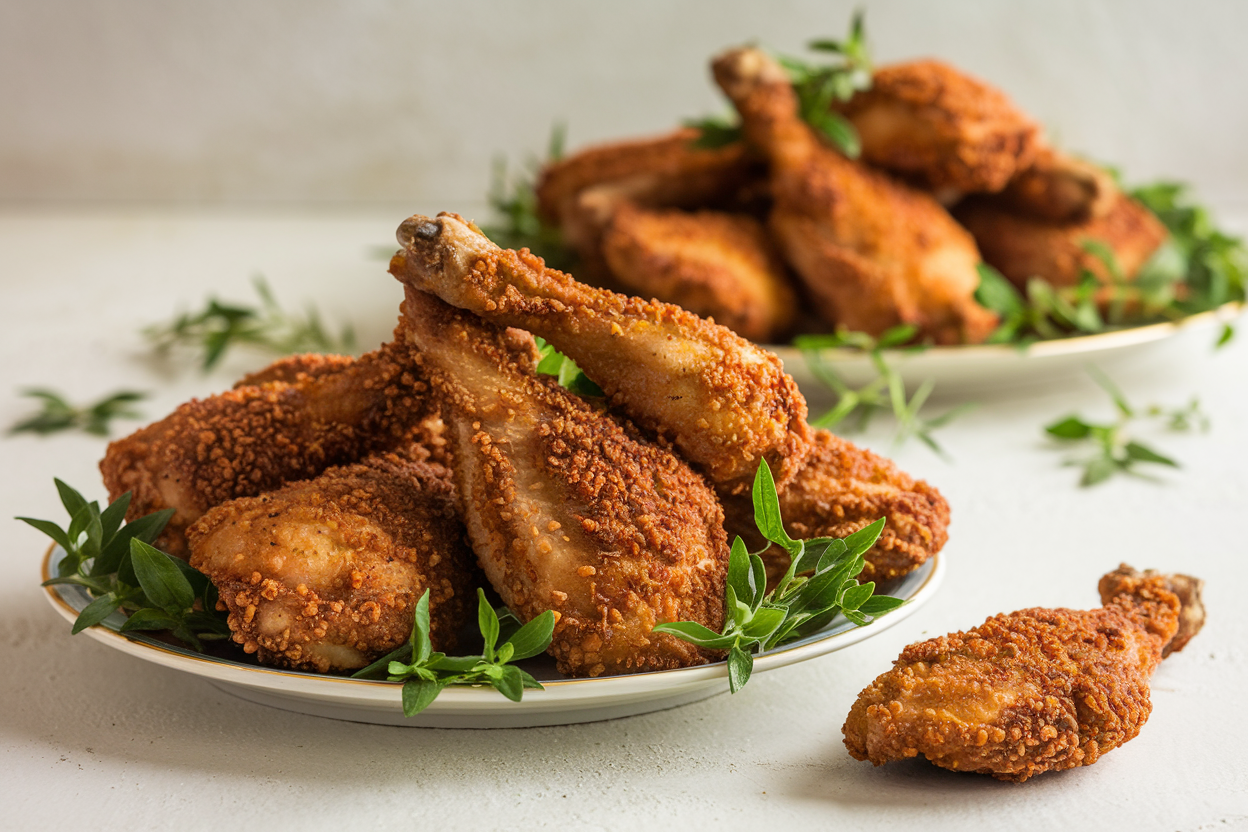
No grandma required. Just smart technique that locks in juice, builds skyscraper-level crunch, and makes you the most popular person within a five-mile radius. If you’ve ever been disappointed by soggy crusts or dry meat, consider this your redemption arc.
What Makes This Recipe So Good
- Ridiculous crunch: A cornstarch-and-flour blend plus double dredge gives a shattering crust without being heavy.
- Serious juiciness: A buttermilk brine tenderizes and seasons the meat, so every bite drips (in a good way).
- Flavor that slaps: Garlic, paprika, onion, white pepper, and a hint of cayenne create layers without blowing out your palate.
- Fry smarter, not harder: Temperature control and a rest between dredges give you pro-level results at home.
- Works with any cut: Drumsticks, thighs, breasts, even wings—adjust times and you’re golden.
Ingredients
- Chicken: 3–4 lbs mixed pieces (thighs, drumsticks, breasts, or wings), skin-on, bone-in preferred
- Buttermilk brine:
- 2 cups buttermilk
- 2 teaspoons kosher salt
- 1 teaspoon black pepper
- 1 teaspoon garlic powder
- 1 teaspoon onion powder
- 1 teaspoon hot sauce (optional, but recommended)
- Seasoned dredge:
- 2 cups all-purpose flour
- 1/2 cup cornstarch
- 2 teaspoons kosher salt
- 2 teaspoons paprika (sweet or smoked)
- 1 teaspoon garlic powder
- 1 teaspoon onion powder
- 1 teaspoon white pepper (or black pepper)
- 1/2–1 teaspoon cayenne (to taste)
- For frying:
- Neutral high-heat oil (peanut, canola, or vegetable), 2–3 inches deep
- Thermometer (clip-on or instant-read)
- Optional finishers:
- Flaky salt, to finish
- Honey or hot honey drizzle
- Lemon wedges
Cooking Instructions
- Brine the chicken: In a large bowl, whisk buttermilk, salt, pepper, garlic powder, onion powder, and hot sauce.
Add chicken and toss to coat. Cover and refrigerate 4–12 hours. Overnight yields the juiciest results.
- Mix the dredge: In a wide bowl, combine flour, cornstarch, salt, paprika, garlic powder, onion powder, white pepper, and cayenne.
Taste a pinch; it should be boldly seasoned.
- Set up a rack: Place a wire rack over a sheet pan. This is your staging and resting area to keep the crust crisp.
- First dredge: Remove chicken from brine, letting excess drip. Dredge in the flour mixture, pressing to adhere.
Place on the rack and let sit 10 minutes. This hydrates the flour for better cling.
- Create the craggy crust: Dip each piece back into the buttermilk (a quick splash is fine), then into the dredge again. Squeeze and rough up the surface to form ridges—those “crags” are crunch gold.
- Heat the oil: In a heavy pot or Dutch oven, heat oil to 325–350°F.
Aim for 340°F before adding chicken; it will drop when the cold meat hits.
- Fry in batches: Add chicken without crowding. Maintain 300–325°F. Fry dark meat 12–15 minutes, breasts 10–12 minutes, wings 8–10 minutes, turning occasionally.
Remove when deeply golden and internal temp hits 165°F at the thickest point.
- Rest and finish: Drain on a clean wire rack. Sprinkle a pinch of flaky salt while hot. Rest 10 minutes so juices settle and crust sets.
If you want to be extra, drizzle with hot honey or squeeze lemon.
- Keep warm (optional): Hold finished pieces in a 250°F oven on a rack while you fry the rest. Don’t cover—steam ruins crispiness, and we don’t do soggy.
How to Store
- Refrigerate: Cool completely, then store in an airtight container up to 3–4 days. Put a paper towel under the chicken to absorb excess moisture.
- Freeze: Wrap each piece tightly, then place in a freezer bag.
Freeze up to 2 months. Thaw overnight in the fridge.
- Reheat: Best in a 375°F oven or air fryer for 10–15 minutes until hot and crisp. Avoid microwaves unless you like sadness.
Health Benefits
- Protein-rich: Chicken delivers a solid protein punch for muscle repair and satiety.
Thighs and breasts both bring value; choose based on your macros.
- Iron and B vitamins: Dark meat offers more iron, zinc, and B12. Your energy levels will thank you.
- Customizable fat profile: Frying adds calories, sure, but you control the oil type and portion size. Peanut or canola oil keeps saturated fat modest.
- Gluten-free option: Swap the flour for a rice flour–cornstarch mix.
You still get the crunch without the gluten. Win-win, IMO.
Pitfalls to Watch Out For
- Oil too hot or too cool: Too hot burns the crust before the inside cooks. Too cool leads to greasy chicken.
Guard that 300–350°F zone like it’s your phone battery at 2%.
- Crowding the pot: It crashes the oil temp and ruins texture. Fry in batches and be patient.
- Skipping the rest: Both the pre-fry rest after dredging and the post-fry rest matter. They’re the difference between epic and average.
- Under-seasoning: Season the brine and the dredge.
The crust is your billboard—make it read loud and clear.
- Soggy storage: Never store hot chicken in a sealed container. Steam equals mush. Let it cool on a rack first.
Variations You Can Try
- Nashville hot: Whisk 1/3 cup hot frying oil with cayenne, brown sugar, paprika, garlic powder, and salt.
Brush over fresh-fried chicken. Painfully delicious.
- Korean-inspired: Double-fry wings for extra crunch. Toss in gochujang-honey-garlic sauce and sprinkle sesame seeds.
- Buttermilk herb: Add chopped fresh dill and parsley to the brine and dredge.
Serve with lemon and herbed yogurt.
- Gluten-free crunch: Use 1 1/2 cups rice flour + 1/2 cup cornstarch. The crisp factor is wild.
- Spice bomb: Add ground cumin, coriander, and smoked paprika to the dredge. Finish with lime zest and flaky salt.
- Air fryer cheat: Spray dredged chicken lightly with oil and air fry at 375°F until 165°F.
Not identical, but shockingly close and lighter.
FAQ
Can I skip the buttermilk?
Yes, but replace it with 1 3/4 cups milk plus 2 tablespoons lemon juice or vinegar. Let it sit 5 minutes to thicken. The acidity helps tenderize and season, which is the whole point.
Why use cornstarch in the dredge?
Cornstarch lowers gluten formation and promotes a lighter, crisper crust.
It also helps those signature flaky shards adhere. Basically, it’s your crunch insurance policy.
How do I keep the crust from falling off?
Pat the chicken dry before brining, don’t rush the 10-minute rest after dredging, and avoid flipping constantly in the oil. Handle with tongs at the bone, not the crust.
What oil is best for frying?
Peanut oil is king for flavor and high smoke point.
Canola or vegetable oil works well too. Avoid olive oil—it smokes early and tastes off for deep frying.
Can I use boneless, skinless chicken?
Absolutely. Fry time drops a bit—aim for 6–9 minutes depending on thickness.
Skin-on and bone-in bring more flavor, but boneless is weeknight-friendly, FYI.
Do I need a thermometer?
If you want consistent greatness, yes. It’s the difference between guessing and knowing. A $15 instant-read saves you from raw-inside, burnt-outside disasters.
The Bottom Line
Fried chicken isn’t hard—it’s disciplined.
Brine for juiciness, double dredge for crunch, and control your oil like a pro. Do that and you’ll get chicken so crisp it practically echoes, with meat that stays shockingly tender. Serve it hot, share if you must, and enjoy the silence as everyone devours it.
That sound? It’s victory, and it crunches.
Printable Recipe Card
Want just the essential recipe details without scrolling through the article? Get our printable recipe card with just the ingredients and instructions.