This Sweet Potato Pie Will Make Pumpkin Jealous: Silky, Spiced, and Unreasonably Good
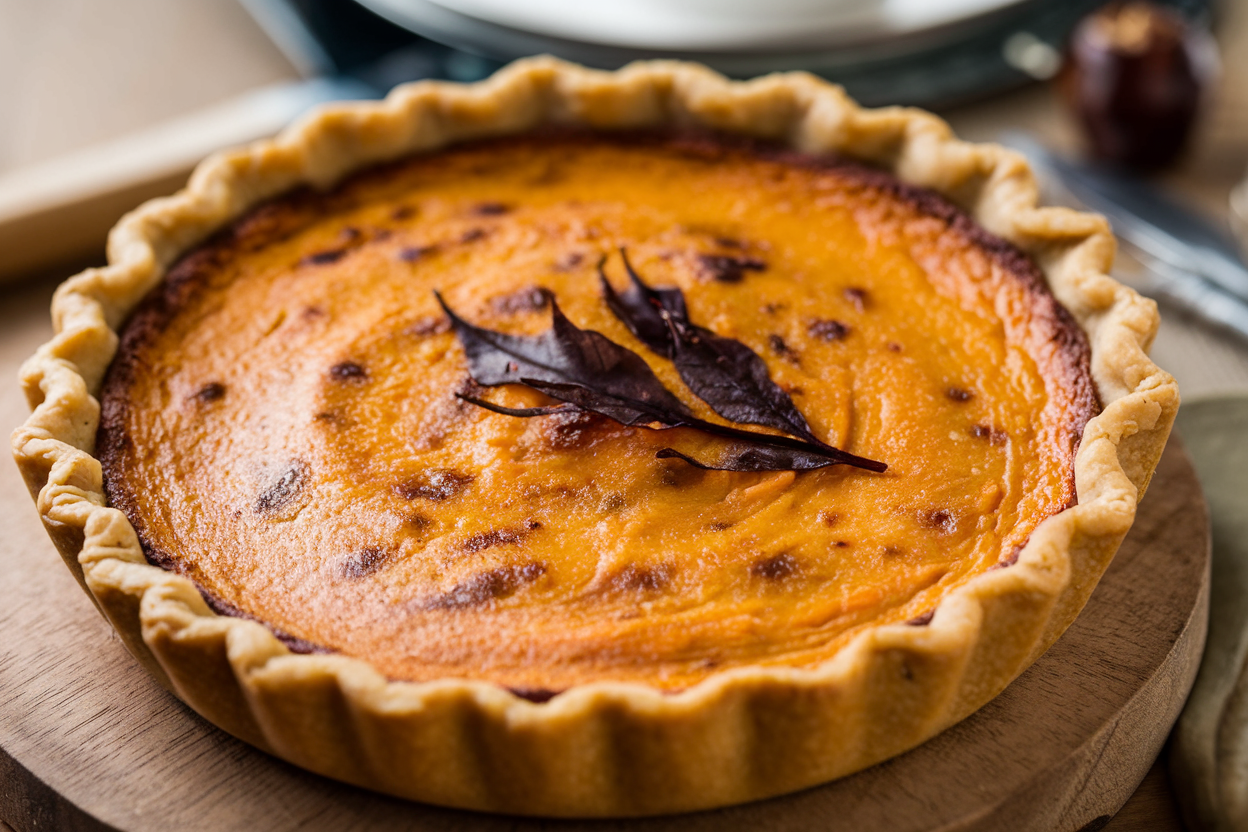
Sweet potato pie doesn’t ask for permission—it shows up creamy, confident, and absolutely steals the holiday table. One slice and you understand why the South has been holding out on everyone else. It’s rich without being heavy, sweet without being cloying, and the texture?
Think velvet in dessert form. If you’ve only known pumpkin pie, consider this your glow-up moment. Let’s build a pie that gets requested year-round, not just tolerated in November.
What Makes This Recipe So Good
- Texture like silk: Roasted sweet potatoes whip into a custard that’s lush, smooth, and sliceable without crumbling.
- Balanced sweetness: Brown sugar adds caramel depth while a touch of maple keeps things warm, not sugary-sweet overload.
- Big flavor, simple steps: Classic spices—cinnamon, nutmeg, ginger—plus vanilla and a little tang from buttermilk bring bakery-level taste with grocery-store effort.
- No blind-bake stress: This filling loves a partially baked crust, reducing sogginess and keeping edges crisp.
- Make-ahead friendly: Tastes even better after a chill, which means no frantic, last-minute baking chaos.
Shopping List – Ingredients
- Sweet potatoes: 2 large (about 1 3/4 to 2 pounds), roasted
- Unsalted butter: 6 tablespoons, melted and slightly cooled
- Brown sugar: 3/4 cup, packed
- Granulated sugar: 1/4 cup
- Eggs: 2 large + 1 yolk, room temperature
- Buttermilk: 1/2 cup (or whole milk plus 1 teaspoon vinegar as a sub)
- Heavy cream: 1/4 cup
- Pure vanilla extract: 2 teaspoons
- Ground cinnamon: 1 teaspoon
- Ground nutmeg: 1/2 teaspoon (freshly grated if possible)
- Ground ginger: 1/2 teaspoon
- Kosher salt: 1/2 teaspoon
- Maple syrup: 1 tablespoon (optional but glorious)
- Pie crust: 1 single 9-inch crust (homemade or quality store-bought)
- Whipped cream: For serving (optional… but why would you skip?)
Cooking Instructions
- Roast the sweet potatoes: Heat oven to 400°F (200°C).
Prick potatoes all over with a fork, place on a baking sheet, and roast 50–65 minutes until very tender. Cool, then scoop flesh from skins.
- Reduce oven temp: Drop to 375°F (190°C). Position a rack in the lower third for best crust browning.
- Pre-bake the crust: Fit crust in a 9-inch pie plate.
Chill 15 minutes. Line with parchment, fill with pie weights or dry beans, and bake 12–15 minutes until just setting. Remove weights, prick any bubbles, and bake 5 more minutes.
Cool slightly.
- Make the potato puree: Mash roasted sweet potato flesh, then process in a food processor 1–2 minutes until ultra-smooth. You want no stringy bits. Measure out 2 cups of smooth puree.
- Build the custard: In a large bowl, whisk puree with brown sugar, granulated sugar, salt, cinnamon, nutmeg, ginger, and maple syrup.
Whisk in melted butter. Add eggs and yolk; whisk until glossy. Stir in buttermilk, cream, and vanilla until silky.
- Fill and smooth: Pour filling into warm crust.
Tap the pan gently to knock out air bubbles; smooth the top with a spatula.
- Bake: Bake at 375°F for 45–55 minutes, until edges are set and the center has a slight wobble (like Jell-O, not waves). If crust browns too fast, tent edges with foil.
- Cool properly: Cool on a rack at least 2 hours. The custard finishes setting as it cools—don’t rush this or you’ll regret it.
- Chill (optional but ideal): Refrigerate 4 hours or overnight for clean slices and deeper flavor.
- Serve: Slice with a warm knife, wipe between cuts, and top with whipped cream.
A sprinkle of cinnamon or flaky salt? Chef’s kiss.
Preservation Guide
- Fridge: Cover tightly and refrigerate up to 4 days. The flavor actually improves on day two.
- Freezer: Freeze whole or sliced.
Wrap in plastic, then foil, up to 2 months. Thaw overnight in the fridge. Refresh slices at 300°F for 8–10 minutes if you like it slightly warm.
- Room temp: Because it’s a custard pie, keep out no more than 2 hours.
Food safety isn’t a vibe—it’s a rule.
- Re-crisp crust: If the bottom softens, place on a preheated baking sheet at 350°F for 10–12 minutes.
Why This is Good for You
- Fiber and nutrients: Sweet potatoes bring beta-carotene (vitamin A), vitamin C, potassium, and fiber—a nutritional flex even in dessert form.
- Balanced fats: Butter and dairy create satiety, helping avoid a sugar spike-and-crash. It’s dessert, not a salad, but it won’t sabotage you.
- Lower glycemic edge: Compared to some pies, this uses the natural sweetness of sweet potatoes to reduce reliance on refined sugar.
- Mood magic: Warm spices like cinnamon and nutmeg aren’t just cozy—they’re associated with improved perceived well-being. Science?
Maybe. Comfort? Absolutely.
Common Mistakes to Avoid
- Using boiled sweet potatoes: Boiling adds water, leading to a watery filling.
Roast instead for concentrated flavor and perfect texture.
- Skipping the puree step: Mashing alone leaves strings and lumps. A quick blitz in the food processor = five-star smooth.
- Overbaking: If the center is fully firm in the oven, it’s already overcooked. Pull it with a gentle jiggle; it sets as it cools.
- Cold ingredients: Room-temp eggs and dairy incorporate better, so the custard won’t break or bake unevenly.
- No crust pre-bake: Straight raw crust under wet custard equals soggy bottom.
Mary Berry would not approve.
Variations You Can Try
- Bourbon boost: Add 1–2 tablespoons bourbon for caramel-oak notes. Pairs ridiculously well with brown sugar.
- Pecan streusel: Top with a mix of chopped pecans, brown sugar, butter, and a pinch of cinnamon for crunch.
- Gingersnap crust: Swap the pastry for a crushed gingersnap-cookie crust with melted butter. Spicy, snappy, and easy.
- Coconut dream: Replace buttermilk with coconut milk and add toasted coconut on top.
Dairy-free and tropical, IMO.
- Mascarpone swirl: Dot the filling with lightly sweetened mascarpone and swirl before baking for a cheesecake vibe.
FAQ
Can I use canned sweet potatoes?
Yes, but drain and pat them dry thoroughly, then puree until smooth. Canned can be slightly sweeter and wetter, so reduce the buttermilk by a tablespoon if the mix looks loose.
Do I need to peel the sweet potatoes before roasting?
Nope. Roast them whole, then the skins slip right off.
It’s faster, cleaner, and preserves moisture and flavor.
How do I know when the pie is done?
The edges will be set, and the center should jiggle like set gelatin, not slosh. An instant-read thermometer inserted near the center should read about 175°F.
What if I don’t have buttermilk?
Use whole milk with 1 teaspoon white vinegar or lemon juice stirred in. Let it sit 5 minutes before adding—instant buttermilk swap.
Can I make this gluten-free?
Yes—use a gluten-free pie crust or a gingersnap/almond flour crumb crust.
The filling is naturally gluten-free.
How do I prevent cracks on top?
Avoid overbaking, and don’t whip in tons of air. A gentle mix and proper cool-down keeps the surface smooth. If a crack happens, whipped cream is a flawless cover-up.
FYI: nobody complains.
Wrapping Up
Sweet potato pie brings comfort, character, and swagger to the dessert table. It’s smooth, warmly spiced, and honestly easier than most people think. Follow the simple cues—roast, puree, pre-bake, don’t overcook—and you’ll have a pie that converts pumpkin loyalists in one bite.
Make it once, and it becomes tradition. Your future self (and every guest with a fork) says thanks.
Printable Recipe Card
Want just the essential recipe details without scrolling through the article? Get our printable recipe card with just the ingredients and instructions.