Easy Korean Beef Bowls: The 20-Minute Flavor Bomb Your Weeknight Deserves
You’re one skillet and 20 minutes away from dinner that tastes like you hacked a restaurant. No marinades. No complicated steps.
Just sizzling beef, glossy sauce, and a bowl that makes meal prep look like a flex. It’s sweet, savory, a little spicy, and totally addictive. If your weeknights feel chaotic, this is the recipe that brings order—without sacrificing flavor or your sanity.
Why This Recipe Works
High impact, low effort. Ground beef cooks fast, drinks up sauce, and delivers huge flavor in minutes.
No slicing steak thin enough to see through.
The sauce is balanced. Brown sugar, soy sauce, garlic, ginger, and a hint of gochujang or red pepper flakes create sweet-heat umami that hits all the right notes.
Built for customization. Rice, cauliflower rice, quinoa—whatever your carb of choice, it works. Add veggies, swap proteins, tweak heat. Easy dubs.
Meal-prep friendly. This reheats like a champ.
The sauce keeps the beef tender and flavorful, even on day three. FYI: it freezes well too.
What Goes Into This Recipe – Ingredients
- 1 lb (450 g) ground beef (80–90% lean works best)
- 2 tablespoons neutral oil (avocado, canola, or light olive oil)
- 4 cloves garlic, minced
- 1 tablespoon fresh ginger, grated (or 1 teaspoon ground ginger in a pinch)
- 1/3 cup low-sodium soy sauce (or tamari/coconut aminos)
- 3 tablespoons brown sugar (light or dark)
- 1–2 teaspoons gochujang (Korean chili paste) or 1/2–1 teaspoon red pepper flakes
- 1 tablespoon rice vinegar (or lime juice)
- 1 teaspoon sesame oil
- 1/4 cup water (optional, for saucier bowls)
- 3 cups cooked rice (white jasmine, short-grain, or brown)
- 2 cups quick veggies (steamed broccoli, shredded carrots, thinly sliced cucumbers, or sautéed bell peppers)
- 2–3 green onions, thinly sliced
- 1 tablespoon toasted sesame seeds (for topping)
- Optional: fried egg, kimchi, lime wedges, sriracha
Instructions
- Cook your rice. If you haven’t prepped rice, start it now. White rice takes ~15 minutes; brown may take longer.
Microwavable pouches are totally fair game.
- Whisk the sauce. In a small bowl, mix soy sauce, brown sugar, gochujang (or red pepper flakes), rice vinegar, sesame oil, and water if you want it saucier. Set aside.
- Brown the beef. Heat oil in a large skillet over medium-high. Add ground beef and break it up.
Cook until it’s well-browned with crispy bits, about 6–8 minutes. Drain excess fat if needed.
- Add aromatics. Push beef to the sides. Add garlic and ginger to the center.
Sauté 30–45 seconds until fragrant, then stir everything together.
- Sauce it up. Pour in the sauce and stir. Let it simmer 2–3 minutes until slightly thickened and glossy. Taste and adjust heat/sweetness to your preference.
- Prep veggies. While the beef simmers, steam or sauté your veggies, or slice them raw for crunch.
No judgment—pre-shredded carrots and bagged broccoli are MVPs.
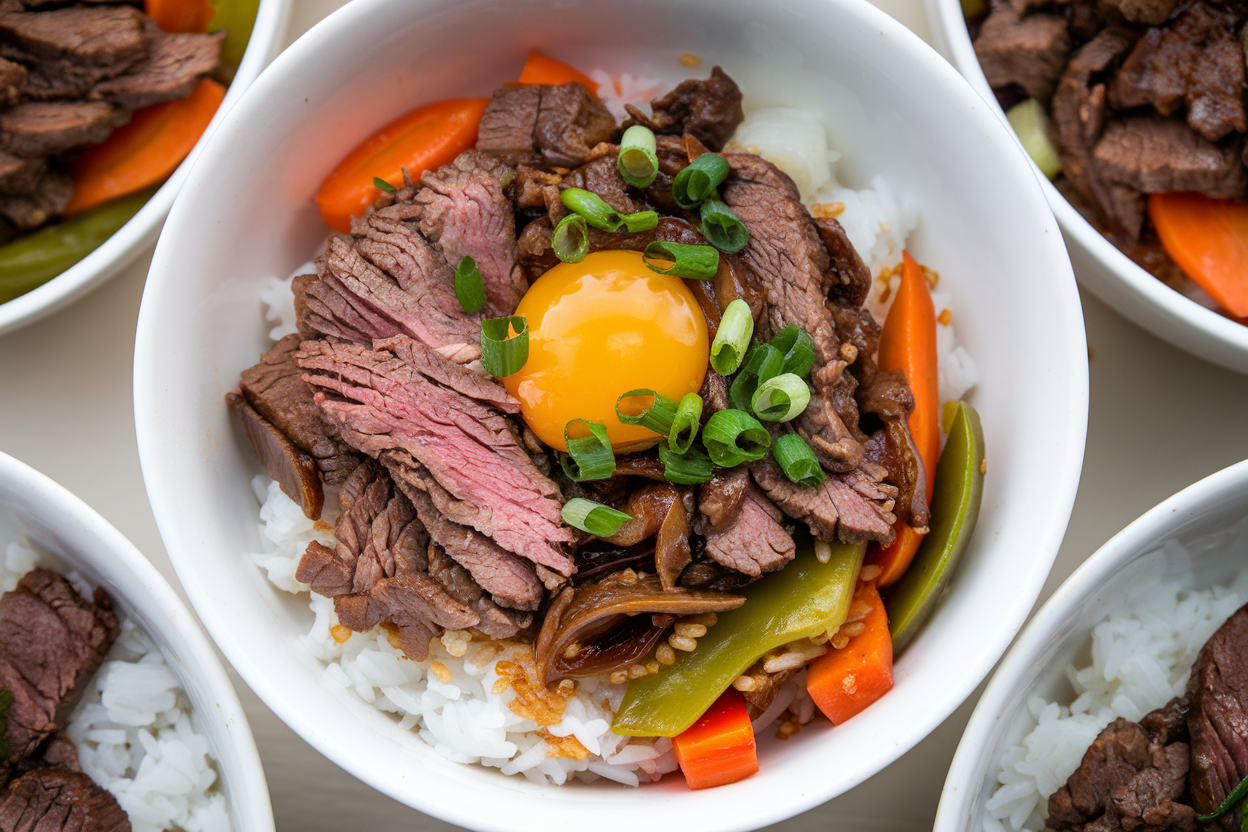
- Assemble bowls. Spoon rice into bowls, top with beef, add veggies, then finish with green onions and sesame seeds. Optional fried egg on top for the win.
- Serve. Add kimchi, a squeeze of lime, or extra chili for heat. Snap a pic.
Pretend you meal-prepped this effortlessly (because you did).
Storage Instructions
- Fridge: Store beef and rice separately in airtight containers for 3–4 days. Veggies keep 2–3 days depending on type.
- Freezer: The cooked beef freezes up to 2 months. Cool completely, then portion into freezer bags.
Thaw overnight in the fridge.
- Reheating: Microwave with a splash of water to keep it moist, or warm in a skillet over medium heat. Add a touch of soy sauce if flavor needs a boost.
Nutritional Perks
- Protein-packed: Ground beef brings ~20–25g protein per serving, keeping you full and focused.
- Iron and B vitamins: Beef supports energy and cognitive function—aka fewer 3 p.m. slumps.
- Adjustable carbs: Serve over cauliflower rice or quinoa if you’re watching carbs or want extra fiber.
- Healthy fats: A little sesame oil adds flavor with minimal quantity. Keep it reasonable and you’re golden.
Common Mistakes to Avoid
- Skipping the browning. Pale beef equals bland beef.
Let it sear undisturbed for a minute or two to develop flavor.
- Overcrowding the pan. If your skillet is small, cook in two batches. Steamed beef is not the goal—crisp edges are.
- Going sauce-heavy without balance. Too much sugar or soy can overpower. Taste as you go and keep a little rice vinegar on standby to brighten.
- Forgetting salt control. Use low-sodium soy sauce.
Regular works, but then skip extra salt entirely.
- Adding garlic too early. Burnt garlic = bitter. Sauté briefly after the beef browns.
Variations You Can Try
- Turkey or chicken swap: Use ground turkey or chicken for a leaner profile. Add 1–2 teaspoons extra oil to help browning.
- Gochujang-forward: Increase gochujang to 1 tablespoon for deeper heat and tang.
Reduce sugar slightly to maintain balance.
- Bulgogi-style twist: Add 1 teaspoon grated pear or apple to the sauce for subtle sweetness and tenderizing vibes.
- Veggie-loaded: Stir in shredded cabbage, diced zucchini, or mushrooms during the last 3–4 minutes of cooking.
- Low-carb bowl: Serve over cauliflower rice with sautéed greens, and swap brown sugar for a no-cal sweetener you like.
- Sticky glaze: Mix 1 teaspoon cornstarch with 1 tablespoon water; stir into the sauce for extra cling.
- Spicy-crunch topper: Finish with chili crisp or crispy shallots. Because texture matters.
FAQ
Can I make this without gochujang?
Yes. Use red pepper flakes or a squirt of sriracha.
The flavor won’t be as deep as gochujang, but it’ll still slap. You can also add a touch of miso for extra umami if you have it.
What’s the best rice for this?
Short-grain white rice or jasmine is classic and sticky enough to hold the beef. Brown rice and quinoa are great high-fiber swaps.
Cauliflower rice works if you want low-carb, just season it well.
Is this authentically Korean?
This is a weeknight-friendly, Korean-inspired bowl using flavors found in dishes like bulgogi and bibimbap. It’s not a traditional recipe, but it respects the key flavor profiles—sweet, savory, garlicky, and a little spicy.
How do I make it less sweet?
Use 1–2 tablespoons brown sugar instead of 3, and increase rice vinegar by 1 teaspoon. You can also lean more on gochujang for heat and depth without extra sweetness.
Can I meal prep this for the week?
Absolutely.
Portion rice, beef, and veggies into containers. Keep any cucumbers or raw toppings separate so they stay crisp. Reheat beef and rice together, then add fresh garnishes.
What if I only have regular soy sauce?
Use it, but reduce the amount to 1/4 cup and don’t add extra salt.
Taste at the end and adjust with a splash of water or rice vinegar if it feels too salty.
How spicy is this?
Mild to medium, depending on your gochujang or flakes. For no heat, skip the chili and add a pinch of black pepper. For extra heat, add more gochujang or a drizzle of chili oil at the end.
My Take
This is my “I have 20 minutes and zero patience” hero recipe.
It’s reliable, bold, and flexible enough to handle whatever’s in your fridge. The secret is browning the beef hard and using a punchy sauce that coats every bite. Add a fried egg and some kimchi, and suddenly it feels premium.
IMO, this is how you win weeknights without breaking a sweat—or a budget.
Printable Recipe Card
Want just the essential recipe details without scrolling through the article? Get our printable recipe card with just the ingredients and instructions.