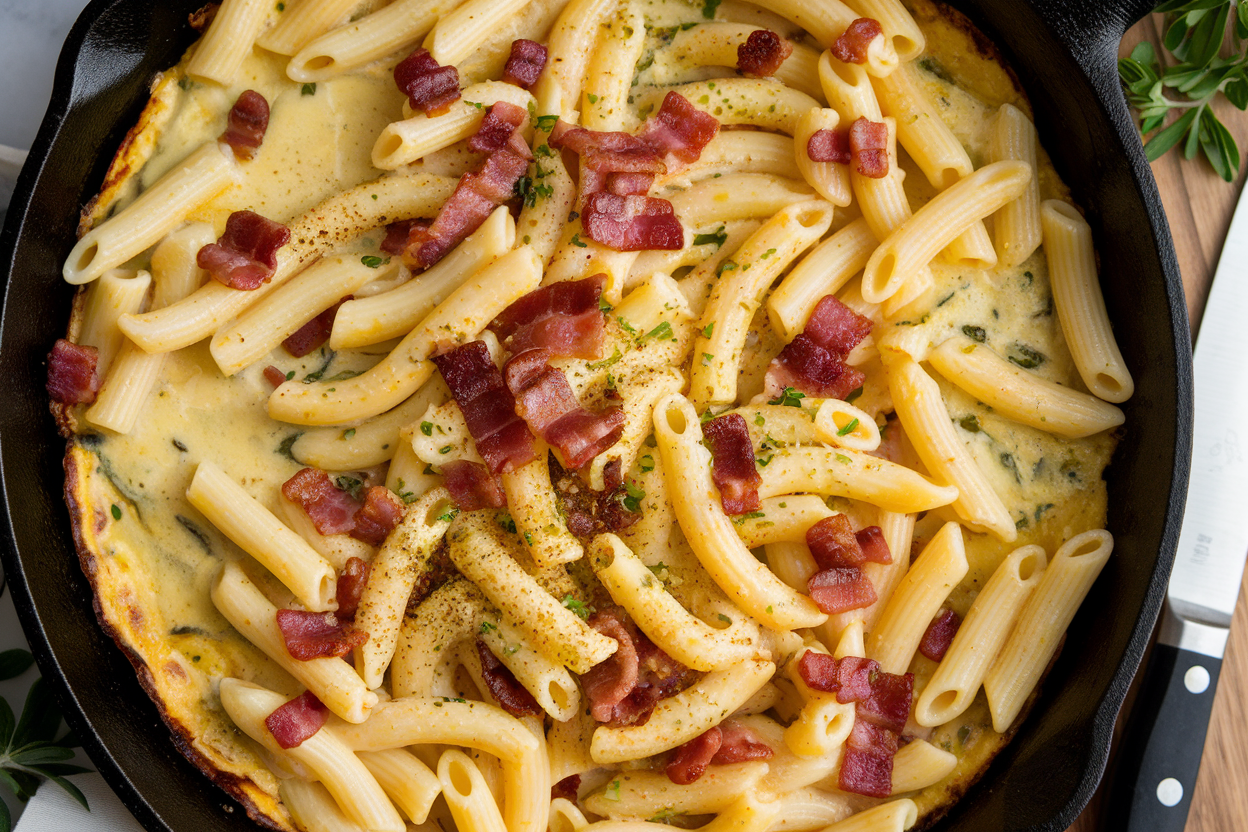
Pasta Carbonara Frittata: The Crispy-Edged, Cheese-Laced Brunch Hack You’ll Brag About
You know those meals that look fancy, hit hard, and secretly save you time and money? This is that move. Pasta Carbonara Frittata flips leftover spaghetti into a golden, custardy slice of “I planned this” genius.
It’s creamy meets crunchy, eggy meets smoky, and—bonus—it works for breakfast, lunch, dinner, or that 11 p.m. fridge raid. No special equipment, no drama, just a pan, some eggs, and the confidence of an Italian nonna with a deadline.
Why This Recipe Works
Classic carbonara gets a glow-up when it’s baked into a frittata. The eggs set into a tender custard, the pasta crisps at the edges, and the cheese melts into every nook.
You get a structure that slices cleanly, yet stays ridiculously creamy inside.
Using starchy pasta (ideally spaghetti) helps the eggs cling, so every bite is cohesive. Pancetta or guanciale brings salt and smoke, while a quick blast of high heat finishes the top without overcooking the center. Translation: maximum flavor, minimal mess.
Ingredients Breakdown
- Cooked spaghetti or bucatini (10–12 oz; about 3–4 cups) – Day-old is perfect; the starch helps bind.
- Eggs (6 large) – The foundation of the custard.
- Parmigiano-Reggiano (1/2 cup, finely grated) – Nutty, salty richness.
- Pecorino Romano (1/4 cup, finely grated) – Sharper bite for classic carbonara vibes.
- Pancetta or guanciale (4–6 oz, diced) – Smoky, savory fat = flavor insurance.
- Garlic (1 clove, minced) – Optional, but boosts aromatic depth.
- Black pepper (1–2 tsp, freshly cracked) – Carbonara demands peppery heat.
- Olive oil (1–2 tbsp) – For coating the pan and crisping edges.
- Salt – Go light; the cheese and pork bring salinity.
- Parsley (2 tbsp, finely chopped) – Fresh finish and color pop.
- Optional: a splash of cream (2 tbsp) – Not traditional, but it softens and enriches.
Cooking Instructions
- Preheat and prep. Heat your oven to 400°F (205°C).
Place a 10–12 inch oven-safe skillet (cast iron is king) on medium heat.
- Crisp the pork. Add pancetta/guanciale to the dry skillet. Cook 5–7 minutes until browned and the fat renders. If using garlic, stir it in for the last 30 seconds.
Scoop the pork out; leave 1–2 tablespoons of fat in the pan.
- Whisk the custard. In a large bowl, whisk eggs, Parm, Pecorino, black pepper, and a small pinch of salt. Add the optional cream if using. You want a smooth, pourable mix.
- Toss in the pasta. Add the cooked spaghetti to the bowl.
Mix to coat every strand. Fold in the crispy pork.
- Oil and sizzle. Add olive oil to the skillet if it looks dry. Heat until it shimmers.
Pour in the pasta mixture and spread evenly, pressing down gently to compact.
- Set the base. Cook on the stovetop 3–4 minutes without stirring. The edges should look set and start to brown—this is your crunchy halo.
- Bake to finish. Transfer the skillet to the oven. Bake 8–12 minutes until the center is just set and barely jiggly.
Don’t overbake unless you enjoy rubber eggs (you don’t).
- Rest and release. Let it cool 5 minutes. Run a spatula around the edges. Slide onto a board or plate.
Sprinkle parsley.
- Serve. Slice into wedges. Add extra cheese and pepper on top because you’re the boss.
Storage Instructions
- Fridge: Store slices in an airtight container for up to 3 days. Reheat gently in a skillet over low heat or in a 300°F (150°C) oven for 8–10 minutes.
- Freezer: Wrap individual slices tightly and freeze up to 2 months.
Thaw overnight in the fridge, then reheat in the oven for best texture.
- Meal prep tip: Pack slices with a small lemony arugula salad—hot-cold contrast hits different.
Benefits of This Recipe
- Zero waste hero: Leftover pasta becomes a showstopper instead of a sad container at the back of the fridge.
- Flexible timing: Make it ahead, reheat like a champ, and serve any time of day.
- High satiety: Protein from eggs plus carbs from pasta equals staying power. Snack attacks, denied.
- One-pan wonder: Minimal dishes, maximum applause. Your sink will thank you.
- Entertaining gold: Slices cleanly, holds its shape, and looks impressive on a platter.
IMO, it’s brunch MVP.
Don’t Make These Errors
- Overcooking the eggs: Dry, spongy frittata is a crime. Pull it when it’s barely set in the center.
- Skipping the crisp: That initial stovetop set creates the signature crunchy edge. Don’t rush it.
- Using too much salt: Cheese and cured meat already bring salt.
Taste before seasoning.
- Wet, clumpy pasta: If your pasta is freshly cooked, pat it dry or let it steam off. Excess moisture dilutes flavor.
- Wimpy pepper: Carbonara needs bold black pepper. Grind generously.
Recipe Variations
- Veggie-loaded: Fold in sautéed mushrooms, peas, or spinach.
Cook off moisture first to keep the frittata set.
- Spicy Calabrian: Add chopped Calabrian chiles or red pepper flakes and a touch of smoked mozzarella.
- Bacon and corn: Swap pancetta for thick-cut bacon; add sweet corn kernels for a summer twist.
- Gluten-free: Use your favorite GF spaghetti; everything else stays the same.
- Herb garden: Finish with chives, basil, or dill. Fresh herbs = instant brightness.
- Extra-cheesy top: Sprinkle a thin layer of mozzarella or provolone before baking for a melty lid.
- Mini frittatas: Divide mixture into oiled muffin tins; bake 10–14 minutes at 375°F (190°C) for grab-and-go portions.
FAQ
Can I use other pasta shapes?
Yes. Spaghetti is traditional and binds beautifully, but linguine, bucatini, or short shapes like rigatoni also work.
If using short pasta, press it down firmly so the custard fills the gaps.
Do I have to use both Parmigiano and Pecorino?
No, but the combo hits a perfect balance of nutty and sharp. If you only have one, use Parm for mellow richness or Pecorino for a saltier, punchier profile.
Is cream necessary?
Not at all. Classic carbonara doesn’t use cream.
It’s optional here for a silkier texture. If your eggs are super fresh and you don’t overbake, you won’t miss it.
What if I don’t have pancetta or guanciale?
Thick-cut bacon is a fine substitute. In a pinch, you can use cooked Italian sausage or even diced ham, but you’ll lose that signature carbonara flavor.
Still tasty though—no judgment.
How do I prevent sticking?
Use a well-seasoned cast-iron or a quality oven-safe nonstick skillet. Preheat the pan, leave a little rendered fat, add a drizzle of oil, and don’t flip or fuss during the stovetop set.
Can I make it dairy-free?
You can omit the cheese and increase seasoning with black pepper and herbs, but the flavor profile will shift. Consider adding a spoon of nutritional yeast for umami depth, FYI.
How do I know it’s done?
Look for edges fully set and the center just barely jiggly when you shake the pan.
A knife inserted near the center should come out moist but not runny.
Can I serve it cold?
Absolutely. It eats well at room temp or cold, which makes it great for picnics or meal prep. The texture stays tender, and the flavors mellow nicely.
The Bottom Line
Pasta Carbonara Frittata is your secret weapon: fast, unfussy, and shockingly elegant.
It stretches leftovers into a crowd-pleaser with crispy edges, creamy center, and big Italian energy. Make it once, and you’ll “accidentally” cook extra pasta just to have an excuse for round two. Your brunch game?
Instantly upgraded.
Printable Recipe Card
Want just the essential recipe details without scrolling through the article? Get our printable recipe card with just the ingredients and instructions.