Greek Baklava That Ruins All Other Desserts: Crispy, Syrupy, Absolutely Unfair
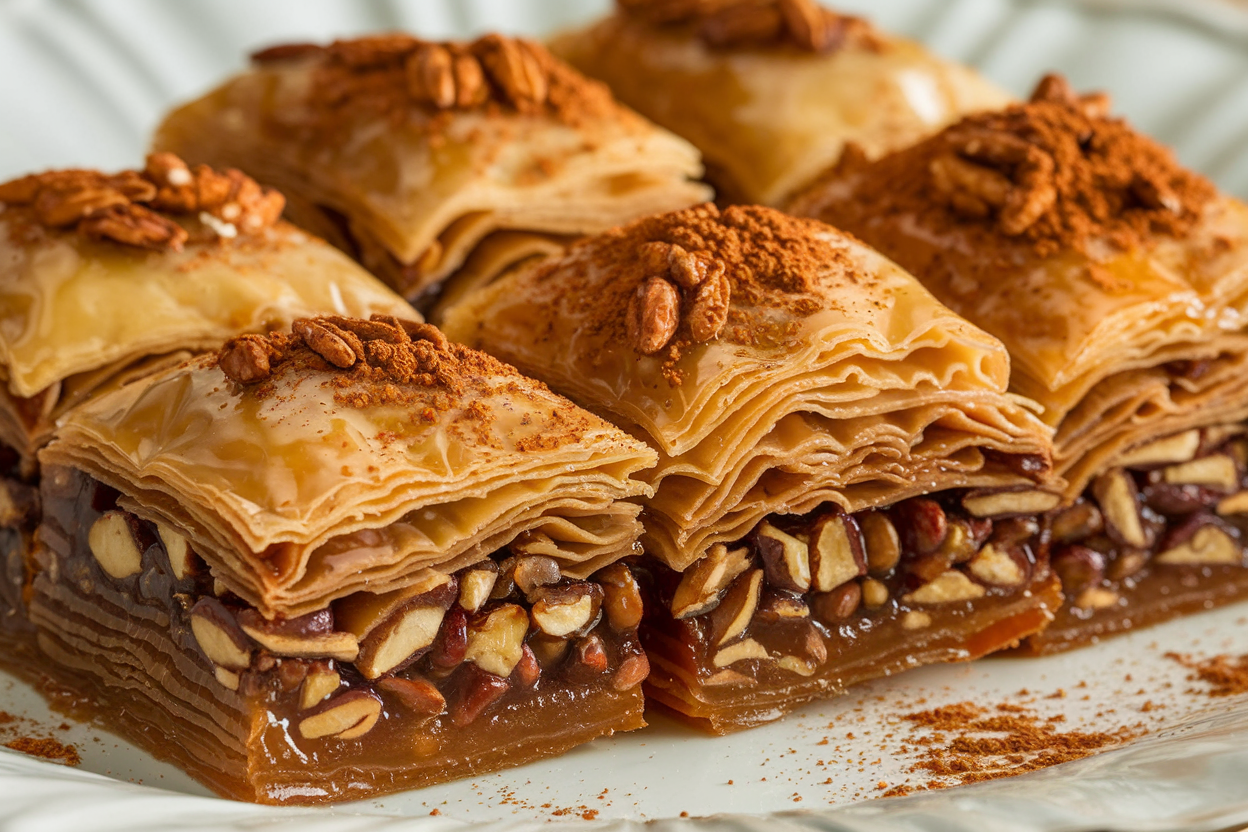
Picture this: you set a tray of golden Greek Baklava on the table and the room goes silent. Then the crunch hits, the syrup whispers, and suddenly you’re everyone’s favorite person. This isn’t just a dessert; it’s a flex—layers of flaky phyllo, toasted nuts, and a citrus-honey syrup that clings just enough.
No culinary school needed, just patience and a knack for butter. By the end, you’ll feel like a Greek yiayia with a spreadsheet—organized, ruthless, and unstoppable.
What Makes This Special
Greek Baklava is a masterclass in contrast: shatteringly crisp phyllo and silky, aromatic syrup married to a toasty nut center. The magic?
Hot baklava meets cool syrup (or vice versa), locking in texture without sogginess.
Unlike some versions, Greek-style syrup leans on honey, lemon, and cinnamon with a clean finish—no heavy caramel notes overshadowing the nuts. It also ages like fine gossip; day two is often better than day one.
And yes, it’s impressive. But once you learn the rhythm—brush, layer, sprinkle, repeat—you’ll realize it’s more assembly than chef sorcery.
Ingredients
- Phyllo dough: 1 pound (16 oz), thawed in the fridge overnight
- Unsalted butter: 1 to 1 1/4 cups, melted (more if your soul says yes)
- Walnuts: 2 cups, finely chopped
- Pistachios: 1 cup, finely chopped (or use all walnuts for classic Greek style)
- Granulated sugar (for filling): 1/4 cup
- Ground cinnamon: 2 teaspoons
- Ground cloves: 1/4 teaspoon (optional but very Greek)
- Fine sea salt: 1/4 teaspoon
- Orange or lemon zest: 1 teaspoon
For the syrup:
- Water: 1 cup
- Granulated sugar: 1 cup
- Honey: 3/4 cup (Greek thyme honey if you can swing it)
- Fresh lemon juice: 2 tablespoons
- Lemon peel: 2 wide strips
- Cinnamon stick: 1
- Whole cloves: 2–3 (optional)
Step-by-Step Instructions
- Prep the phyllo like a pro: Thaw overnight in the fridge.
Before starting, let it sit at room temp for 30 minutes. Keep it covered with a barely damp towel to prevent drying. Dry phyllo = confetti.
- Make the syrup first: In a saucepan, combine water, sugar, honey, lemon juice, lemon peel, cinnamon stick, and cloves.
Bring to a gentle boil, then simmer 10 minutes until slightly thickened. Remove from heat, fish out the spices, and cool completely.
- Mix the nut filling: Combine walnuts, pistachios, sugar, cinnamon, cloves, salt, and citrus zest. Aim for a fine chop—no boulders.
Set aside.
- Heat the oven: Preheat to 350°F (175°C). Butter a 9×13-inch pan—corners too.
- Build the base: Lay down a sheet of phyllo, brush lightly with melted butter. Repeat with 8–10 sheets, buttering each.
Don’t overthink tears; patch and move on.
- First nut layer: Scatter about 1 to 1 1/4 cups of the nut mixture evenly. Don’t pack it—light hands win here.
- Middle phyllo stack: Add 4–6 sheets of phyllo, buttering between each. Keep the edges tidy-ish.
- Second nut layer: Another 1 to 1 1/4 cups of nuts, evenly spread.
- Top phyllo stack: Finish with 8–10 more buttered sheets.
Brush the final sheet generously. Channel your inner artist.
- Score before baking: With a sharp knife, cut baklava into diamonds or squares—go all the way through. Wipe the blade as needed.
This is where it becomes irresistible and geometric.
- Bake: 45–55 minutes until deep golden and crisp. If the top browns too quickly, tent loosely with foil. Your kitchen should smell like a Greek bakery by minute 30.
- Syrup meet-cute: Remove the hot baklava from the oven and immediately pour the cooled syrup evenly over the cuts and surface.
You should hear the happy sizzle of destiny.
- Rest: Let it sit at room temperature for 4–6 hours (or overnight) to absorb. Yes, waiting is painful. Worth it.
Storage Instructions
- Room temperature: Keep uncovered for the first 6–8 hours to maintain crispness, then cover loosely.
Lasts 5–7 days.
- Refrigeration: Extends life to about 2 weeks but softens the phyllo. If you must, re-crisp in a 300°F (150°C) oven for 5–8 minutes.
- Freezing: Freeze baked, fully cooled pieces layered with parchment in an airtight container for up to 3 months. Thaw at room temp; rewarm lightly to refresh.
Health Benefits
Is baklava a kale salad?
No. But it has redeeming qualities. Walnuts and pistachios bring healthy fats, plant protein, and antioxidants that support heart health. Cinnamon and cloves add trace compounds with anti-inflammatory perks.
Using honey in the syrup provides a touch of minerals and a lower water activity, which helps preserve the dessert. Portion control goes a long way: a small square satisfies thanks to the rich texture.
FYI, it’s dessert with benefits, not a multivitamin.
Pitfalls to Watch Out For
- Wet phyllo = soggy baklava: Always pour cool syrup over hot baklava (or hot syrup over cooled baklava). Same temperature on both sides is a soggy trap.
- Under-buttering: Dry patches won’t crisp and will flake weirdly. Light, even brushing on every sheet is key.
- Rushing the rest: Cutting too soon after syruping leads to crumble city.
Let it absorb and set.
- Chunky nuts: Big pieces prevent clean cuts and even layers. Aim for fine, not dusty.
- Overbaking the top: Watch the last 10 minutes; color should be deep gold, not mahogany charcoal.
Variations You Can Try
- All-walnut classic: Go 100% walnuts for the most traditional Greek profile.
- Pistachio-forward: Swap ratios to 70% pistachio for a greener, slightly sweeter vibe.
- Orange blossom: Add 1–2 teaspoons orange blossom water to the cooled syrup for floral notes.
- Chocolate drizzle (controversial but fun): A light zigzag of dark chocolate after cooling. Don’t drown it—this is baklava, not a brownie.
- Spice shift: Cardamom in place of cloves for a brighter, citrusy lift.
- Mini rolls: Roll narrow logs instead of layering, then slice into bites.
Great for parties and commitment issues.
FAQ
Can I make baklava ahead of time?
Yes. Baklava actually improves after a day as the syrup distributes. Make it the day before serving and you’ll look like a genius with foresight.
Why did my baklava turn soggy?
Likely because both syrup and baklava were the same temperature when combined, or it was covered too tightly while still warm.
Use the hot-cold rule and let it breathe at first.
Can I reduce the sugar?
You can cut the sugar in the syrup by about 15–20% and use a touch more honey for flavor. Just keep total liquid volume similar so absorption stays balanced.
Is ghee better than butter?
Ghee has a higher smoke point and a nutty flavor that works beautifully. It also minimizes soggy spots because there’s no milk solids to burn.
IMO, it’s an upgrade.
Do I need to toast the nuts?
Optional but recommended. A quick toast in a 325°F (165°C) oven for 6–8 minutes enhances flavor. Let them cool before chopping to avoid greasy clumps.
How do I get clean cuts?
Use a razor-sharp knife, score before baking, and finish cutting once cooled.
Wipe the blade between cuts. Patience > crumbs.
Can I use oil instead of butter?
Butter (or ghee) brings essential flavor. Neutral oil will crisp but tastes flat.
If you must, do a 50/50 blend to keep some character.
What’s the ideal thickness?
About 1.5–2 inches in a 9×13 pan. Too tall and the syrup won’t penetrate; too thin and the layers dry out.
In Conclusion
Greek Baklava proves that simple ingredients, stacked with intention, can taste like a holiday. Master the hot-cold syrup trick, respect the phyllo, and don’t skimp on butter.
The payoff is crisp, fragrant, and utterly addictive—consider yourself warned. Share it generously or guard it like a dragon; either way, you win.
Printable Recipe Card
Want just the essential recipe details without scrolling through the article? Get our printable recipe card with just the ingredients and instructions.